DAWN
I was born.
I saw a few things.
I wrote some of it down.
I was born.
I saw a few things.
I wrote some of it down.
I lived for a little while, as we all do,
and I will die, as we all will.
I’m happy that I came out of
nonexistence
and saw the sun
before I go back.
Birthday
came out of the bookstore onto carson by comma coffee.
had an old paris review. cost me $5.50. not bad.
some paintings by woody guthrie were on the cover.
i couldn't read it. i was too crazy.
the guys in the bookshop were laid back and friendly. we'd talked a little.
the kid'd been sorting books, pulling them out of boxes.
he asked the older one who isadora duncan was. there was an old autobiography.
the old guy said he couldnt remember. "she'll know," referring to me.
i dont know why he said it,
but he was right, so i told them who she was.
then i went out and walked. i had to hurry.
i had to tell everybody the big news.
i felt mad with it.
i stopped outside a restaurant. people were eating on the patio.
good a place as any.
i had to tell everybody about my baby.
to tell the truth, i was kind of dizzy. too much excitement all at once.
out of the blue, so to speak.
i felt like my whole body was vibrating. sizzling. i was infused with light.
i looked at the people. i looked at their plates. i looked at their decanters of wine.
they were just stuffing their faces and staring at their phones.
i had to wake them before they faded into nothing, there wasnt much time left for them.
they were killing themselves with gluten and sulfites. the phones were frying their eyeballs. they sat there talking too much and saying nothing.
well, i was gonna talk
and i was gonna say something.
i was gonna scream it at them.
and just like that i did.
Observing Peacefulness: A Moment in Time
Whenever I find myself in the hospital room, I stand next to the bed on which rests my dead mother. This happens many, many times in indecipherable periods. I am looking out the window. It is June 14, meaning I am nearly 17.5 years old. I am staring at the white blinds. They are slanted open. I look through countless strips of plastic.
Staring at the blue sky. I can see it above the top of the concrete roof. I'm captivated by the stunning blue sky above the hospital's concrete roof. The sky appears clear, and light, reserved for days with a gentle breeze and minimal pollution. My friend Danny and I quickly left our trailer in San Jose after receiving a call around 7:30 a.m. It's now around 9:30, not yet 10:00. As the day progresses, loses its clarity and the heat will intensify, fitting for the June 14th, 1990 weather.
Observing my mother, I'm amazed at her peacefulness, accentuated by the neat, white bandage wrapping the top of her head. Despite the underlying concern about her wound, her face appears remarkably smooth. The lines around her eyes have softened. Her eyelids are at absolute rest. blue, a rare si the light will roof belongs to the fifth floor of the other wing of The Hospital.
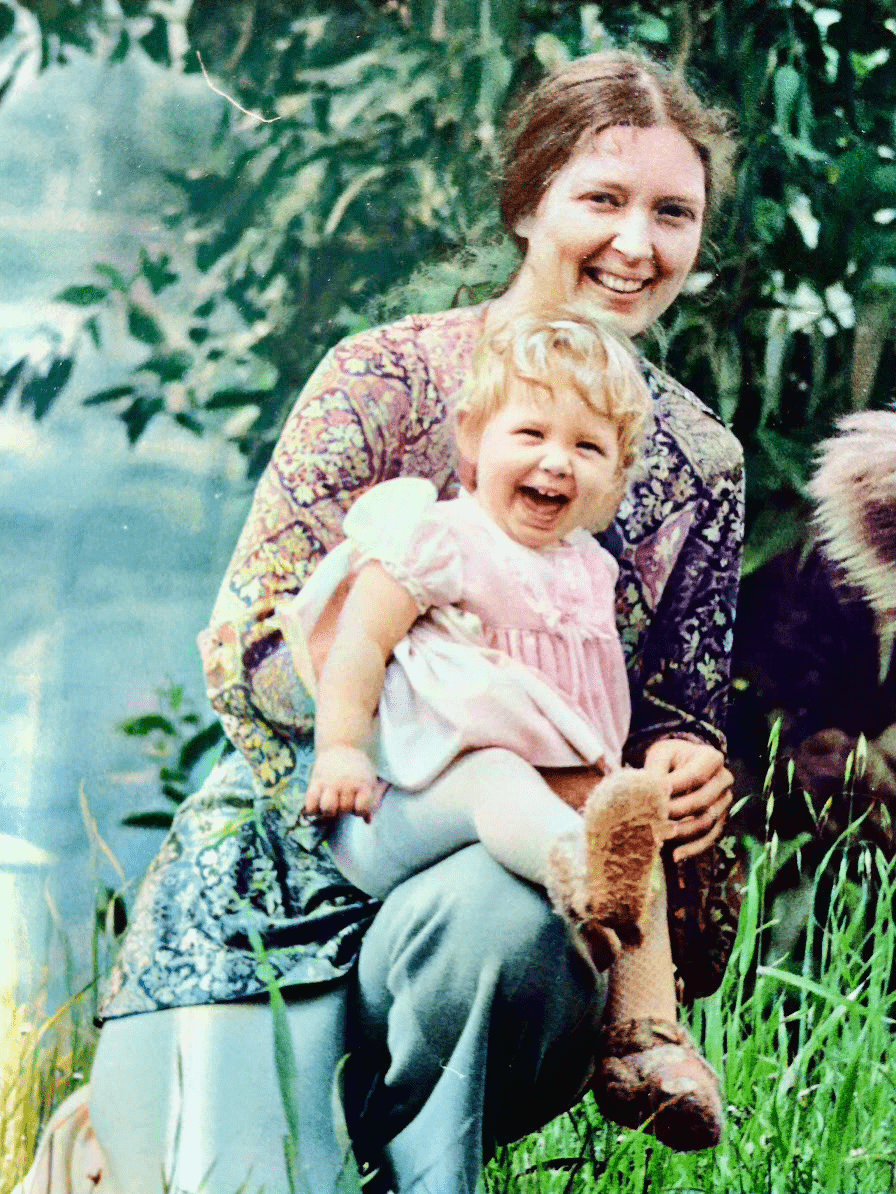
The sky is blue above the concrete roof of the hospital. It's that clear, clear, clear, clean, lightish blue. A gift. This blue only happens for a little bit of time. It shows up on days with a slight breeze and little pollution. Danny and I--Danny Lee Clark Junior (he's dead now, too) and I--had left the trailer in San Jose. We left after the call came. It was around 7:30 a.m. Now, it was around 9:30. It wasn't yet 10:00. The light would be less clear at 10:00. It would start to look hot. And it was, after all, June. June 14th. 1990. I look at my mother. I look at her. She looks peaceful. I'd never seen her look so peaceful. Ever. The bandage wrapped around the top of her head was neat, and clean, and white. It only covered the top of her eyebrows. I would not--did not--think about the bloody wound hiding beneath the clean, white dressing. I realized that I'd never seen her face so smooth, the lines around her eyes had softened. Now I stared at her eyelids, which simply rested. Still.
This is how I'd always remember my mother's face. Still. Peaceful, at sleep.
Peaceful.
Every Day, Amnesia In The Morning
Like a lot of people, I wake up every morning. I'm sure this is true because I'm alive. Again.
I wake up every morning and realize I'm alive. I find myself on a sofa in a living room. I stare at my hands and think about how they still work. Sometimes I can't control my emotions, and my mind feels like a storm of conflicting feelings. It's hard to make sense of these emotions, and some days are tougher than others.
My phone tells me it's Saturday, and as I wake up, I try to piece together where I am. The bright room with too many windows and empty glasses makes me think I'm not at home. I live with two roommates, one of whom is my eleven-year-old son. I struggle to remember where I am and the people around me. I often wake up feeling confused and in pain.
I have been living with my best friend, Louise, for over a year, but I struggle to remember our history clearly. I've distanced myself from the outside world and find it hard to leave the house. I often struggle with the memories of my past, because the occasions are, more often than not, memories that are disturbing. Before, I'd blocked out so much of my earlier years. But now those recollections are back, and much more detailed than before.
I recall an experience of getting my clit piercing, and it reminds me of other occasions when I altered my body and appearance. I find myself walking outside, aimlessly, and sometimes-to a liquor store. After the surgery, my license was taken away. Past events that happened in the past battle inside my skull. Memories aren't the same anymore.
Neuropsychologist Diagnoses
During one of my recentish stays at Baylor Hospital a social worker came to my room. This isn’t unusual. What was unusual was that she came to me to tell me that I qualify for mental disability. The social worker told me I qualify for disability because it can help me access basic health care. It can also help me pay for medical care to deal with my increasingly problematic pancreas. She has already set up an appointment for me at the psychiatry clinic in Parkland.
I qualify for mental disability because I have documented medical records that show I have severe atrophy. Brain damage. People with cerebral atrophy, lose brain cells (neurons), which causes connections between their brain cells. Brain volume decreases. This loss of brain volume can lead to problems with thinking, memory, functioning, and —
The greater the loss, the more brain is fucked. This is a phrase that plays on an infinite loop inside my skull. Every time I look for some item I put somewhere I put myself down for being such an idiot. Then I remember that my brain is fucked. But. Life will go on. And I'll forget that.
Anyway. Back to Saint Mary’s. Anesthetics activate memory-loss receptors in the brain, ensuring that folks don’t remember what happens during surgery. The activity of memory loss receptors remains high long after the drugs have left the patient’s system, sometimes for days, sometimes longer. We all be unique. Oh! More fun. I almost forgot — get it?? I almost forgot??? Awhile ago I was hospitalized for hepatic encephalopathy, which is a brain disorder that happens when the liver is fucked.
Loss of brain ability occurs when the liver can't remove toxins from the blood. This is called hepatic encephalopathy (HE). This problem occurs suddenly or it develop slowly over time.
The cause for my high ammonia levels in my body was from iron buildup in my liver. (Also, I have hep C and hemochromatosis.)
Hemochromatosis is a disease that’s easy to keep tolerable. The main treatment is phlebotomy to remove iron, through blood. But, this easily accessible treatment is only easily accessible to people with health coverage. I am not one of those people. Ergo, my body is failing from iron overload and is trying to poison me in myriad ways.
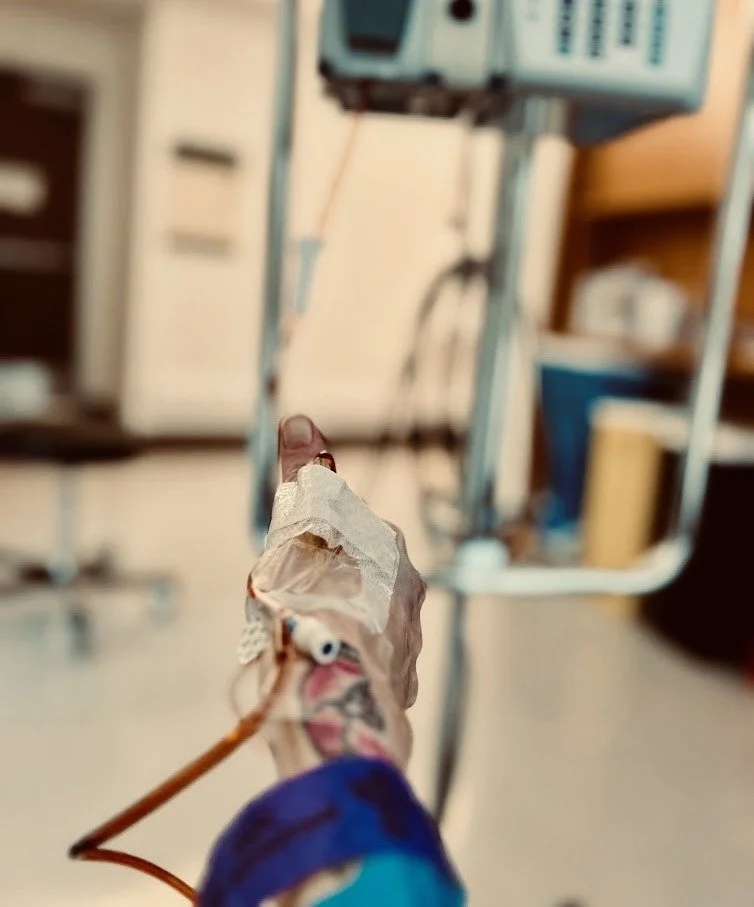
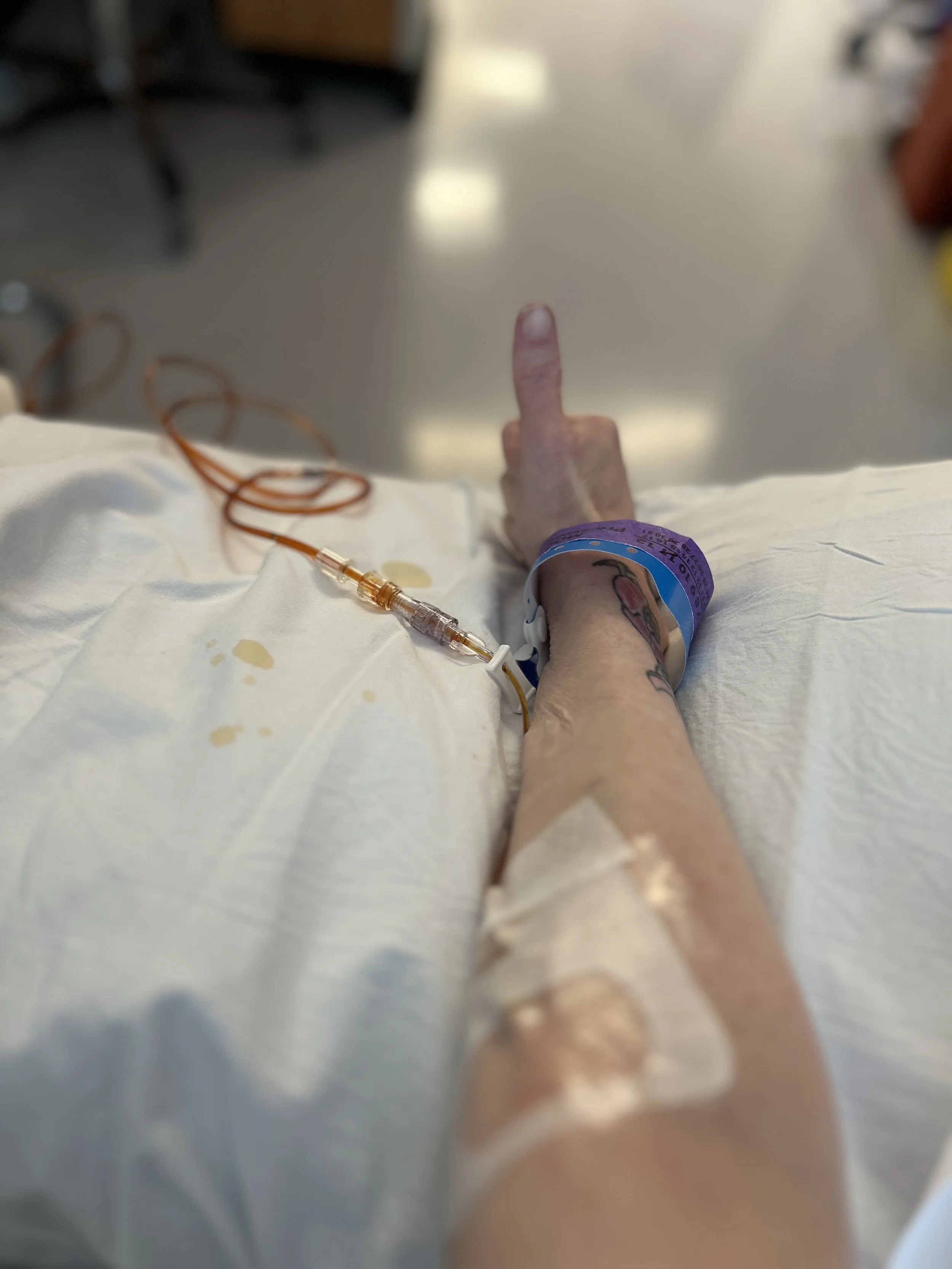
The hepatic encephalopathy incident was so scary I remember a lot of it. Like being literally chained to a hospital bed so I get ammonia drained, and…meds pumped in. I was so fucking fucked in the motherfucking head at this point—I refused to stay in bed. So the big guns—aka needles—were brought to fight the battle to fight the battle with ammonia brain. Anyhow. I’m mental. Je suis officiellement fou. And I was scared.
So I’m going to knit. A lot. And think about being officially mental. Mentally disabled. But hey. Balls to the walls, ammiright?
My Name's Michelle And I'm Not An Alcoholic.
Alcohol was the only thing that felt familiar and seemed to help me get through a life I barely remembered.
Vodka wasn’t always how I coped. I didn’t start using alcohol to deal with all my mental and physical shit until I was in my late 30s. My marriage was with an abusive person. And hemochromatosis made it feel worse.
Hemochromatosis is a Hemochromatosis is an iron disorder in which the body simply loads too much iron. This action is genetic and the excess iron, if left untreated, can damage joints, organs, and eventually be fatal.
Hemochromatosis is an ailment for which testing is not consistently done. Meanwhile this DNA mutation causes a bunch of shit, so we're just living with a disease that causes:
- Cirrhosis (liver damage)
- Heart problems
- Arthritis (joint pain)
- Diabetes
- Gallbladder disorders, such as mine. My gallbladder ruptured because of iron overload.
Many women don’t get diagnosed until after menopause, since that’s when our natural blood loss stops. Most doctors I’ve talked with don’t know much about HFE. A recent study found that only about 1 in 100 people in the U.S. are correctly diagnosed with this condition, even though it can be very serious.
The short story is that this disease affects a person's head and heart. It also affects the liver, spleen, pancreas, and gall bladder. It was the rupture of my gallbladder that led to the surgery that left me mentally fucked.
Nobody looks for hemochromatosis here. By the time anyone notices, it’s already too late. When my brain felt broken, a drink is the only thing that makes sense.
After the summer of 2017, I forgot who I was, and people kept telling me I was an alcoholic. I couldn’t remember anything else about who I was, and I literally prayed every day that I would die, so drinking quickly became an innate part of what was left of whatever I’d been.
By the end of that first year, fear took over. I didn’t want to feel anything or care. I was completely alone. I had no one, no family, no money, no memory, no car, no license, and no home.
Alcohol was the only thing that felt like home. I thought about drinking myself into the ground, and I didn’t mind. I wasn’t a mother, or a writer, or a wife. I was just a ghost with a broken brain. Life kept moving, but I was gone.
Most of my friends who worried about my drinking really cared about me. But none of that made sense. I still needed notes so knew where I was when I woke up.
Michelle, Feisty, whoever I was. Nothing seemed real. My brain was gone. Words didn’t stick. All I had was the feeling of abandonment, moving through the world like a half-dead thing.
Later, after those lost years, I found myself in a sterile hospital room in Dallas, in a semi-coma due to hepatic encephalopathy from ammonia poisoning.
The sharp, clean, antiseptic smell hovered in the air, mingling with the constant rhythmic beep of the heart screen beside me. This was the moment where my life turned; the faint sound of the screen was like a lifeline, pulling me back from the precipice I hadn't realized I was teetering on. I knew I did not want to be back in some sterile hospital room with all the highpitched beep beep beeps pumelling my inner ears.
At some indecipherable time after the hepatic encephalopathy coma, someone called just to say hi and see how I was doing. By then, I’d been on heart drugs for a while. I called one of my dearest friends to this person that since I’d been taking meds for my erratic heart, I’d been a lot more... calm. I hadn’t been craving xanax and vodka, which, for me, had become an increasingly constant and overwhelming want.

At some indecipherable time after the hepatic encephalopathy coma, someone called just to say hi and see how I was doing. By then, I’d been on heart drugs for a while. I called one of my dearest friends to this person that since I’d been taking meds for my erratic heart, I’d been a lot more... calm. I hadn’t been craving xanax and vodka, which, for me, had become an increasingly constant and overwhelming want.
After that conversation something finally clicked for me. One night I went to sleep and woke up knowing that I wasn’t going to drink anymore.
And I didn’t.
My name is Michelle, and I’m Feisty. I’m a little crazy, a bad ukulele player, and I’m not an alcoholic.
That’s why I haven’t touched a drink in seven years.
A white mug with bold black text that reads "I POURED MYSELF A CUP OF AMBITION" sits on a wooden surface, with blurred windows and brushes in the background.
Amnesia and Mental Health
I feel like I’m breathing through dirt and shards of pain, and that’s all there is. I don’t think I’ve truly given up, but it all feels like bullshit. How many times have I tried to take my own life? Many. And I was terrible at even that.
I need a hug, a real connection with someone I love and trust. I want to feel safe and escape this lonely skeleton hole I claim as my body. I’m on so many medications, mostly for my brain, but I don’t know if they’re helping. If they are, I can't tell because my sense of self is reflected in the disorderly chapters reading to themselves, inside my cerebrum.
This headspace makes it hard to write because I’m afraid to open that wound in my mind-that now feels like a dangerous place to explore. When I was 20 I hopped on a plane that landed in Prague. That was really scary—it was so much frightening then my first trip overseas. In Prague it snowed; I’d never been that cold before.
Recently I’ve been traveling to Barcelona, I often go to Spain. This is the writing I get lost in—the memories and all the hurt. And many nostalgic memories.

Judgement From The Mountains
I am on day eight in Saint Mary's. Reno. I know this hospital is called St. Mary's. I look out my window, down four floors and to the right. I see the neon LED sign spanning the entrance to the emergency room. Saint Mary's, in a bright, glowing red. I am in room 407. That's me. 407.
A young woman with wavy, light brown hair smiles at the camera. She is wearing a feather earring, a black top, and layered necklaces with heart pendants. The background is a plain, dark studio backdrop.
Today. I've been here before. Some of the staff know me. I don't know them. I don't know myself. A few months ago, in April, I had surgery. That surgery was performed at this hospital. They took out my gall bladder. I don't miss it. What I miss is my memory, which was also removed during that surgery. I remember being in my thirties, kinda. I am now forty-three.
It's okay to be judgmental. However, it is only acceptable to be judgmental toward people who are deemed to have problems with things like drinking. This includes other habits that people give up on Mondays and January First. Like eating.
When it comes to surreptitiousness, judgment, and, most of all, help, eating disorders are still hidden. Justified. Pitied. Ignored. Everybody eats.
"Hello?" The soft voice comes through the brown door, with the thudded sound of knuckles tapping wood, three times. The silver industrial handle has no lock, and it rests a tad too far to the right. In Saint Mary's Hospital, everything is crooked.
When I hear the knocks, I'm reading Facebook. People have such pretty lives.
It is the voice of a doctor. The doctors have different voices from the nurses, and the doctors always open the door as they say my name. Nurses knock, then walk in softly.
"Michelle?" The door opens.
I am on day eight in Saint Mary's. Reno. I know this hospital is called St. Mary's. I look out my window, down four floors and to the right. I see the neon LED sign spanning the entrance to the emergency room. Saint Mary's, in a bright, glowing red. I am in room 407. That's me. 407.
I know I'm a writer, but all I can read is music. And now I sing. I sing a lot, and I write music. When I hear myself sing, I remember that my voice sucks.
My current stay is based on a seizure, the result of alcohol withdrawal. I know this is can only partly be true. I drank a couple of shots of vodka. It was less than twelve hours before the violent seizure that led me here. The seizure that took place while I was attending an AA meeting. I only went to the meeting so I could honestly say I did. Some people have no clue about what they're judging. I know AA very well. My father and two of his brothers preached about it for decades, until they died from overusing alcohol and heroin.
I've heard the nurse explain 407 to other nurses. This happens when a new nurse takes a night or morning shift. I hear these conversations, as they take place, usually, a few feet from where I'm staring at the ceiling from my hospital bed. At St. Mary's. What has struck me as interesting, repeatedly, is that I swear all of these conversations have taken place in Spanish. They haven't. But they have. I don't speak Spanish.
Memories & Amnesia: The Never-ending Story
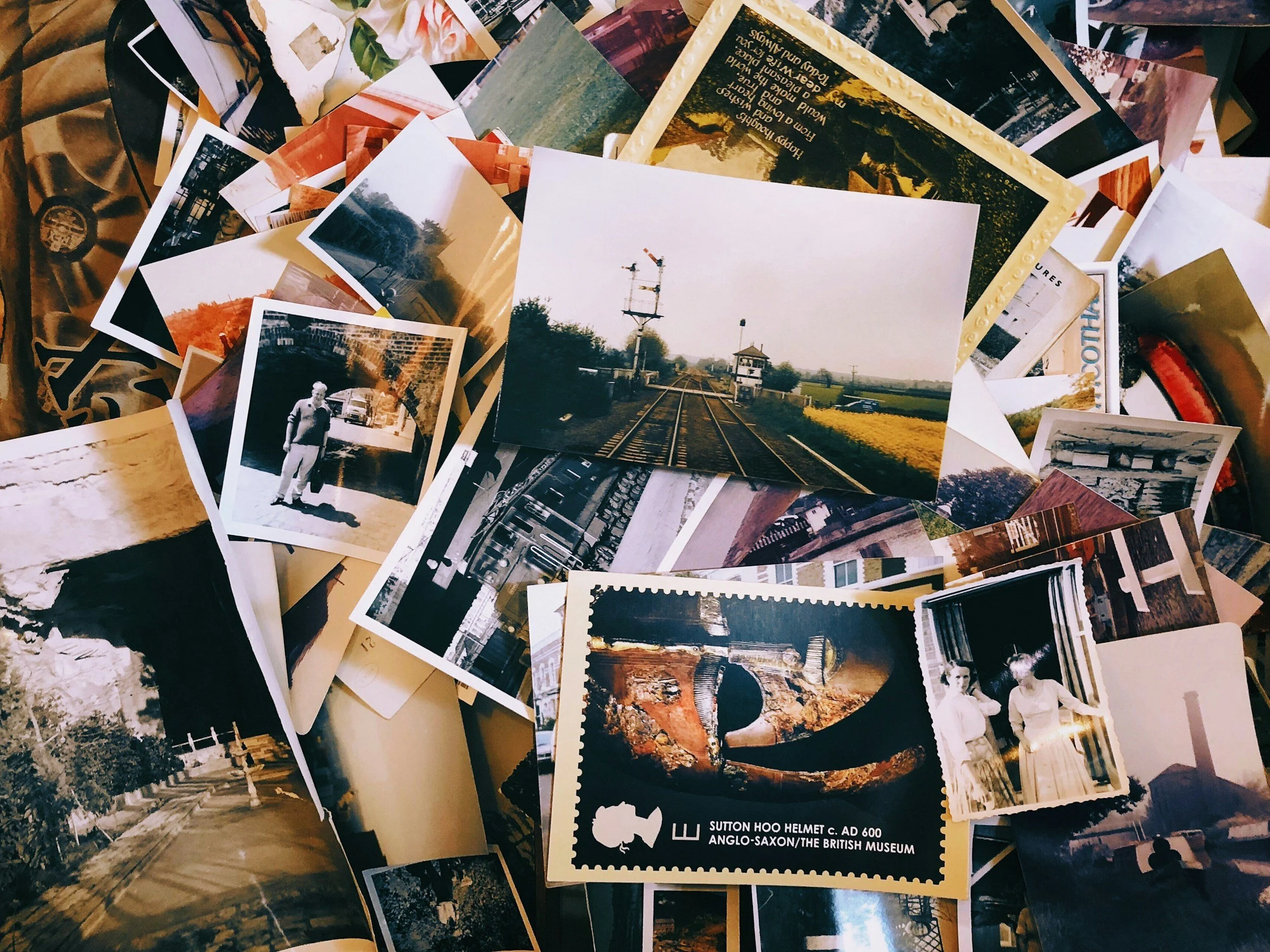
Like a lot of people, I wake up every morning. I'm sure this is true because I'm alive. Again. I'm in a living room, on my back, on an oversized sofa. Staring at my hands, hands that still move and do things like hold a fork and bring food to my mouth. Spaghetti is delicious.
My mind is a storm. I can't stop the hurricanes. Happy, sad, embarrassed, confused, disappointed, scared, disparate. I never remember why I experience these emotions.
My phone says it's Saturday. I'm awake on a sofa. Awaking from what, I do not know. I close my eyes and process what I've just seen. Light. Too much light. Too many windows. Empty glasses scatter several surfaces. I inhale the hot, sizzling scent of bacon. That's how I know where I am.
Where do I live? Not here, on someone's sofa in a stupidly bright room surrounded by windows.
Home? I have two roommates, both of whom I like. One of whom is my son. Every morning I wake up and think of him, and he's going off to kindergarten. He's eleven. And I am thirty-six, about. It is 2019.
When I wake up, this house feels unfamiliar and uncomfortable. Nothing is. Every morning, I wake up confused. It's a storm, my brain is a hurricane, throwing trash at my skull. The garbage is my memories. Some of them belong in the trash, and some are there by mistake.
Moving hurts. Hips and calves and spine—my bones screech. The muscles don't remember yesterday's pain. Like my brain, my body parts remember very little.
I live with Louise, my best friend, and I have done so for over a year. I know it's been this long because she has told me, and I have written it down. I don't remember where I wrote it down. LOST NOTES sounds like a possible book title.
I do feel at home in my home. Everything becomes distant when I'm away from it. I think a lot. It occurs to me that I haven't left my house in days. People tell me to leave my home, and I want to. People ask me to do a lot of things, and telling me makes them feel good. I want to.
I remember that I got my clit pierced, and I remember spreading my legs on a sterile bed so he could stick the needle through my clit. The piercing hurt more than childbirth. A few weeks later, that barbell fell out of my clit, and into the playa's dusty ground.
A sidewalk. I have a destination. Lately, most of my destinations are a handle of vodka. I'm glad that I remembered to wear shoes because the cement is hot. I know it is because earlier I watched the news, and the person on Jake's television said it was going to be over 95 today. That person was a woman, and she smiled in a way that brought up the entire left side of her mouth in a straight line. I only watched her because I wanted to see if her mouth would touch her nose. She had a small waist. I imagined her driving a Saturn with two doors—just two doors for Ms. Sunshine.
I walk. My legs are drumsticks, which I repeatedly drop onto the concrete sidewalk. The cement, the concrete, the sound of gravel under my drumsticks, is a grimy rhythm. Like my memories, rolling in the dirt and being pelted by rocks. By words.
Words are crevices in mountains, and must be waded and climbed through. My drumstick legs are walking in the crumbling, dirty crevices of other people's stares. My heart hates thinking, figuring, remembering. I gave my life away, and now he has my son, and I cannot hear that voice of the person—that person who will always sound like my son. It's another sound I made, and I wish I could listen to it every day.
But. I don't have a phone, and I live somewhere far away, and my drumstick legs can't make a beat as we clank up the rocky mountains. I can't walk home. I can't walk into the ether--even if it's my ether. This I know.
Amnesia, Sleep & Waking Up
Like a lot of people, I wake up every morning. I'm sure this is true because I'm alive. Again. I'm not yet dead. I'm in a living room, on a sofa. Staring at my hands, hands that still move and do things like hold a fork and bring food to my mouth. Spaghetti is delicious.
Amnesia In The Morning
Like a lot of people, I wake up every morning. I'm sure this is true because I'm alive. Again. I'm not yet dead. I'm in a living room, on a sofa. Staring at my hands, hands that still move and do things like hold a fork and bring food to my mouth. Spaghetti is delicious.
My mind is a storm. I can't stop the hurricanes. Happy, sad, embarrassed, confused, disappointed, scared, disparate. I never remember why I experience these emotions. Sometimes I scream them. Sometimes I dream of them.
My phone says it's Saturday. I'm awake on a sofa. Awaking from what, I do not know. I close my eyes and process what I've just seen. Much light. Too much light. Too many windows. Empty glasses were scattered on the top of a wide, pale wooden coffee table. I inhale the hot, sizzling scent of bacon. That's when I know where I am.
Where do I live? Not here, on someone's sofa in a stupidly bright room surrounded by windows.
Home. I have two roommates, both of whom I like. One of whom is my son. Every morning I wake up and think of him and he's going off to kindergarten. He's eleven. And I am thirty-six, about. It is 2019.
When I wake up, this house—not familiar or comfortable. Nothing is. Every morning I wake up, filled with confusion. It's a storm, my brain is a hurricane, throwing trash at my skull. The garbage is my memories. Some of them belong in the trash, and some are there by mistake.
Moving hurts. Hips and calves and spine—my bones screech. The muscles don't remember the pain from yesterday. Like my brain, my body parts remember very little.
I live with Louise, my best friend, and I have done so for over a year. I know it's been this frame of time because she has told me this and I have written it down. I don't remember where I wrote it down. Lost notes.
I do feel at home in my home. I think everything becomes distant when I'm away from it. I think a lot. It occurs to me that I haven't left my house in days. People tell me to leave my home, and I want to. People tell me to do a lot of things, and the telling me makes them feel good. I want to.
I remember that I got my clit pierced, and I remember spreading my legs on a sterile bed so he could stick the needle through my clit. The piercing hurt more than childbirth. A few weeks later that barbell fell out of my clit, and into the playa's dusty ground.
A sidewalk. I have a destination. Lately, most of my destinations are a handle of vodka. I'm glad that I remembered to wear shoes because the cement is hot. I know it is because earlier I watched the news and the person on Jake's television told me it was going to be over 95 today. That person was a woman, and she smiled in a way that brought up the entire left side of her mouth in a straight line. I only watched her because I wanted to see if her mouth would touch her nose. She had a small waist. I imagined her driving a Saturn, with two doors. Just two doors for Ms. Sunshine.
I walk. My legs are drumsticks I keep dropping onto the concrete. I have no beat. I click click clicking clap. The cement, the concrete, the sound of gravel under my drumsticks, is a grimy rhythm. Like my memories, rolling in dirt and being shot by rocks. By words.
Words are crevices in mountains, and must be waded and climbed through. My drumstick legs are walking in the crumbling dirty crevices of other people's stares. My heart hates thinking, figuring, remembering. I gave my life away and now he has my son and I cannot hear that voice of the person—that person who will always sound like my son. It's another sound I made and I wish I could listen to it every day.
But. I don't have a phone and I live somewhere far away, and my drumstick legs can't make a beat as we clank up the rocky mountains. I can't walk home. I can't walk into the ether--even if it's my ether. This I know.
LIFE, THE UNIVERSE AND EVERYTHING
There is a theory which states that if ever anyone discovers exactly what the Universe is for and why it is here, it will instantly disappear and be replaced by something even more bizarre and inexplicable. There is another theory which states that this has already happened.

When I was 17 my mom died. last time I saw her, alive, she was on a gurney. Not yet sedated. Still with me. Still here. Her long, curly brown hair looked like it was being mulled into a surgical skull cap. I was 17. I watched her being pushed, under a blanket, on the gurney, through blue hospital doors, that closed. Quietly. The doors swooshed. That was the last time I saw my mother breathing. The next morning. I saw my mother again. I was still 17. Not my mother. My mother's body was in a hospital room. Lying on her back, on a hospital bed. Her bed against a brown wall, rolled to the side of the room. There was only one bed in the room. I learned that there are always only one bed in those rooms. The dead people rooms.
I am reliving my life as my memories return. Having grown up homeless, in a commune, in the forest, in my father's dark-room, my memories-my life-are weird. I keep track of my memories by writing them down. My memories are an ongoing collection of pretty stories. Some are even true. I think.
Born and raised in Northern California, I moved to the Sierra Nevada high desert just before I turned thirty. Now I'm in Dallas with a friend who helps me deal with life.
Dead people who should be breathing and moving, and dead machines that should be beeping and moving. I felt so shaken, like when I had stood behind the shuddering glass at the one-hour-photo, where I'd worked, last year. That year, I was 16. That was the ‘89 earthquake. Everything shook, rolled, dropped, shattered. Seventeen seconds of rolling destruction. Everything seemed to be wanting to be pulled under the surface of the earth. An invisible force. It was such a quiet, deafening shaking. Like now. Like inside of me now. Looking at my dead mother. Like now. Me. Standing there in a ray of sunlight, on the weirdly soft hospital floor. Always, hospital floors are absorbently quiet. Never walked upon, just padded upon. Except for wheels. Wheels rolled.
The wheels of wheelchairs and gurneys are loud. In hospitals, things, people, are always being pushed. Rolled. I felt more shaken by how little I felt as I looked at her, sleeping without breathing. I wondered if her wheeled bed had squeaked as it rolled her to this room. She still had that skullcap on her head. It was the only time I ever saw my mother's hair look so lifeless. Or my mother
Today, I am alive, technically. My mother and I had brains that weren't built to work for more than forty-two years.
Less than 2 years after I watched my mother wave to me from the rolling bed, waving to me as those big, blue doors drifted shut after she'd been pushed through them—two years later I met J.
The Cause Of My Amnesia-Inducing Surgery
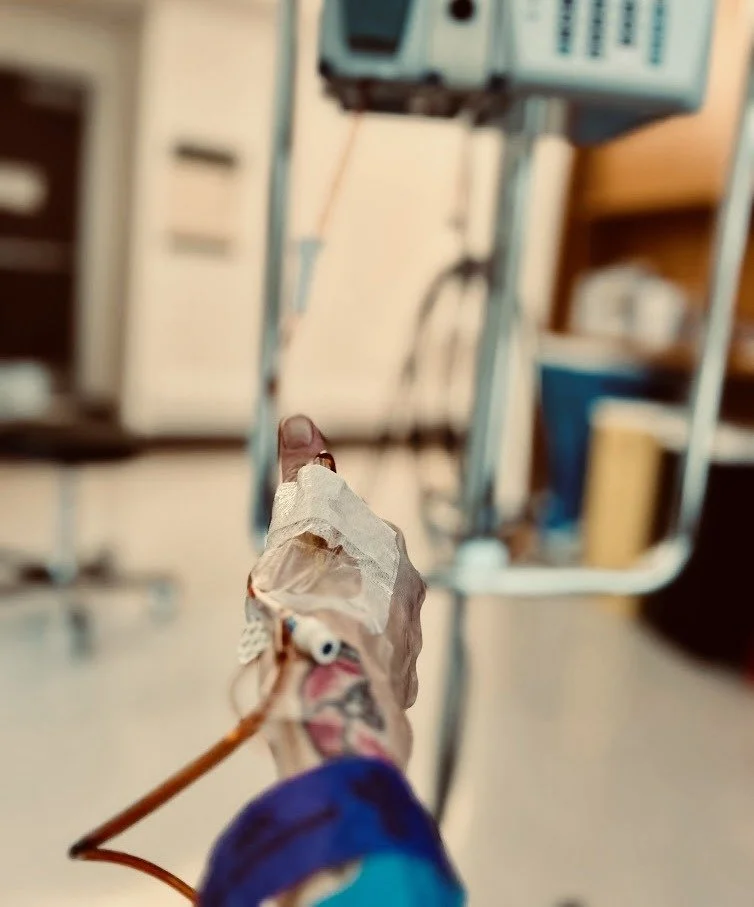
Hemochromatosis, The Celtic Curse
I have hereditary hemochromatosis, which is a genetic disease in which iron absorption is significantly increased. Iron overload is what caused my gallbladder to rupture.
When I woke up after emergency organ removal surgery, everything was blurry. I didn’t recognize anything or anybody, including myself. I was diagnosed with retrograde and antegrade amnesia.
Since that day five years ago, I’ve felt like I’m a time traveler. I landed in a time frame that is 20-30 years behind—whatever time I’m in. I’m infinitely trying to connect who I am to who I used to be. Memories are more than snapshots of past occurrences.
Memories include how we continually learn things—things like how boil an egg, how to know the navigation of of homes I’d spent a lot of time in, or if I ate anything that day.
I didn’t forget instinct, like I’m right-handed or that I’m a writer.
I created this site to share my personal experiences living with amnesia, and to foster understanding and empathy among readers. Thank you for stopping by. I hope my story resonates with you.
Every so often, I send out a newsletter about my physical and mental whereabouts. Make sure to sign up for my newsletter so you don’t miss anything.
P.S. Once, I was a sex phone actor. Now I’m using my voice to launch a podcast. Sign up. You know you want to.

Antegrade & Regrograde Amnesia
Like a lot of people, I wake up every morning. I'm sure this is true because I'm alive. Again. I'm not yet dead. I'm in a living room, on a sofa. Staring at my hands, hands that still move and do things like hold a fork and bring food to my mouth. Spaghetti is delicious.
My mind is a storm. I can't stop the hurricanes. Happy, sad, embarrassed, confused, disappointed, scared, disparate. I never remember why I experience these emotions. Sometimes I scream them. Sometimes I dream of them.
My phone says it's Saturday. I'm awake on a sofa. Awaking from what, I do not know. I close my eyes and process what I've just seen. Much light. Too much light. Too many windows. Empty glasses were scattered on the wide, pale wooden coffee table. I inhale the hot, sizzling scent of bacon. That's when I know where I am.
Where do I live? Not here, on someone's sofa in a stupidly bright room surrounded by windows.
Home. I have two roommates, both of whom I like. One of whom is my son. Every morning I wake up and think of him, and he's going off to kindergarten. He's eleven. And I am thirty-six, about. It is 2019.
When I wake up, this house feels unfamiliar and uncomfortable. Nothing is. Every morning, I wake up confused. It's a storm, my brain is a hurricane, throwing trash at my skull. The garbage is my memories. Some of them belong in the trash, and some are there by mistake.
Moving hurts. Hips and calves and spine—my bones screech. The muscles don't remember yesterday's pain. Like my brain, my body parts remember very little.
I live with Louise, my best friend, and I have done so for over a year. I know it's been this long because she has told me, and I have written it down. I don't remember where I wrote it down. LOST NOTES sounds like a possible book title.
I do feel at home in my home. Everything becomes distant when I'm away from it. I think a lot. It occurs to me that I haven't left my house in days. People tell me to leave my home, and I want to. People ask me to do a lot of things, and telling me makes them feel good. I want to.
I remember that I got my clit pierced, and I remember spreading my legs on a sterile bed so he could stick the needle through my clit. The piercing hurt more than childbirth. A few weeks later, that barbell fell out of my clit, and into the playa's dusty ground.
A sidewalk. I have a destination. Lately, most of my destinations are a handle of vodka. I'm glad that I remembered to wear shoes because the cement is hot. I know it is because earlier I watched the news, and the person on Jake's television said it was going to be over 95 today. That person was a woman, and she smiled in a way that brought up the entire left side of her mouth in a straight line. I only watched her because I wanted to see if her mouth would touch her nose. She had a small waist. I imagined her driving a Saturn with two doors—just two doors for Ms. Sunshine.
I walk. My legs are drumsticks; I keep dropping onto the concrete. I have no beat. I click, click, clicking, clap. The cement, the concrete, the sound of gravel under my drumsticks, is a grimy rhythm. Like my memories, rolling in the dirt and being pelted with rocks. By words.
Words are crevices in mountains, and must be waded and climbed through. My drumstick legs are walking in the crumbling, dirty crevices of other people's stares. My heart hates thinking, figuring, remembering. I gave my life away, and now he has my son, and I cannot hear that voice of the person—that person who will always sound like my son. It's another sound I made, and I wish I could listen to it every day.
But. I don't have a phone, and I live somewhere far away, and my drumstick legs can't make a beat as we clank up the rocky mountains. I can't walk home. I can't walk into the ether--even if it's my ether. This I know.
Phone Sex & Mental Health
When the darkness threatens to overwhelm, I think of my son's laughter as a beacon of light guiding me through. Writing down my thoughts, pouring them onto paper, often helps me make sense of the chaos inside. These small acts remind me there is still beauty to be found, no matter how fractured my world seems.
Not For The Faint Of Heart
I'd often think about the guy in Santa Clara, who got raped when he was thirteen. The worst memories refuse to die.
Twenty years later, that man paid me $1.99 a minute to listen to his stories, and I was never given an algorithm for that. He raped himself every day, having unprotected sex with strangers, and then paid me to hear him. I could not fix him, and that haunted me. I felt a heavy, lingering sadness afterwards, knowing that some pains are too deep to heal. I'm tough, or at least that's what I've always been told, but moments like these make me question the true depth of my resilience.
I was never abused riding a bus or walking around at night, not even in the dark streets of the Czech Republic in the snow. However, I did get surrounded by a bunch of boyish men on a train, on my way through Slovakia. They grouped me in my seat. Instinctively, my gaze shot to the three women near me. They each appeared so engrossed in what they were each reading—they didn’t seem to notice me.
A young man sat next to me and touched me—a poke to my shoulder. I said, 'Go fuck yourself.' It was the only time I've ever uttered that phrase and still been scared. That was a moment of resistance. Moments of violation and of standing up intermingle, shaping who I am now. I'm in an apartment complex. Dallas, technically. Could be anywhere, I don't care. I have no key and nowhere to be. I want to see trees and my son's smile.
If it's not broken, break it.
Despite all this, I find some solace in remembering that I am still breathing and capable of finding moments of genuine connection, even with the weight of these memories. Sometimes, I take a walk in the park or sit quietly and listen to music that soothes me, letting the words flow over me like a soft embrace. When the darkness threatens to overwhelm, I think of my son's laughter as a beacon of light guiding me through. Writing down my thoughts, pouring them onto paper, often helps me make sense of the chaos inside. These small acts remind me there is still beauty to be found, no matter how fractured my world seems.
I sit here, quiet, feeling the ache in my chest pulse with the shadows moving across the wall. My breath is small, barely enough. I haven't tried to die in a long time. Yet despite it all, there's a small light that refuses to go out. I think about my son, the way his eyes light up with curiosity, and I hold onto that. It gives me a reason to breathe on days I find it hard. I wonder if there is still a place for me in this world.
I don't care much about what I missed. I wish I could go back. I wish I weren't sick. I wish I could see my son's first Christmas again, with the dogs who are now dead. I want to cook in that kitchen. I want my garden. I wish I remembered my son's twelfth birthday. I wish I remembered every second of January 7, same time each year.
I remember the delivery room, how big his head was, how he ripped me apart as he pushed his way out of my body. I wish I had my hammock. I wish I could smell honeysuckle. I wish I were riding a snowboard for the first time. I wish I had broken my leg because I was brave enough for roller derby. Again. I wish I still had friends. I wish I still snuggled my dogs: Fritz, Greta, and Harriet. I want my garden.
I wish I were remembered.
I wish I remembered more than this 10-story apartment building, this room with a bed. My entire life, I wish I had lived more of it right. I wish perfection would stay still. I stand in the middle of all these wishes. I wonder: Am I always slipping back into old lives? Can I find a way to be here now?
You think about putting the gun in your mouth. You think about dying. Maybe in the bathtub, water running, or out in a field of gravel, stones pressing into your back. Blood would trickle, maybe splatter, maybe just drip. Hair sticky, but not too much. The bathtub is easier to clean. But a field leaves nothing behind. Death is just another part of nature, a way to solve a problem. They never tell you that. They teach you times tables, that X equals zero, but they never say math's just another unknown language, or that zero is nothing at all. Just a number, just a space in your head.
Amnesia: Albums Of Poloroid Pictures
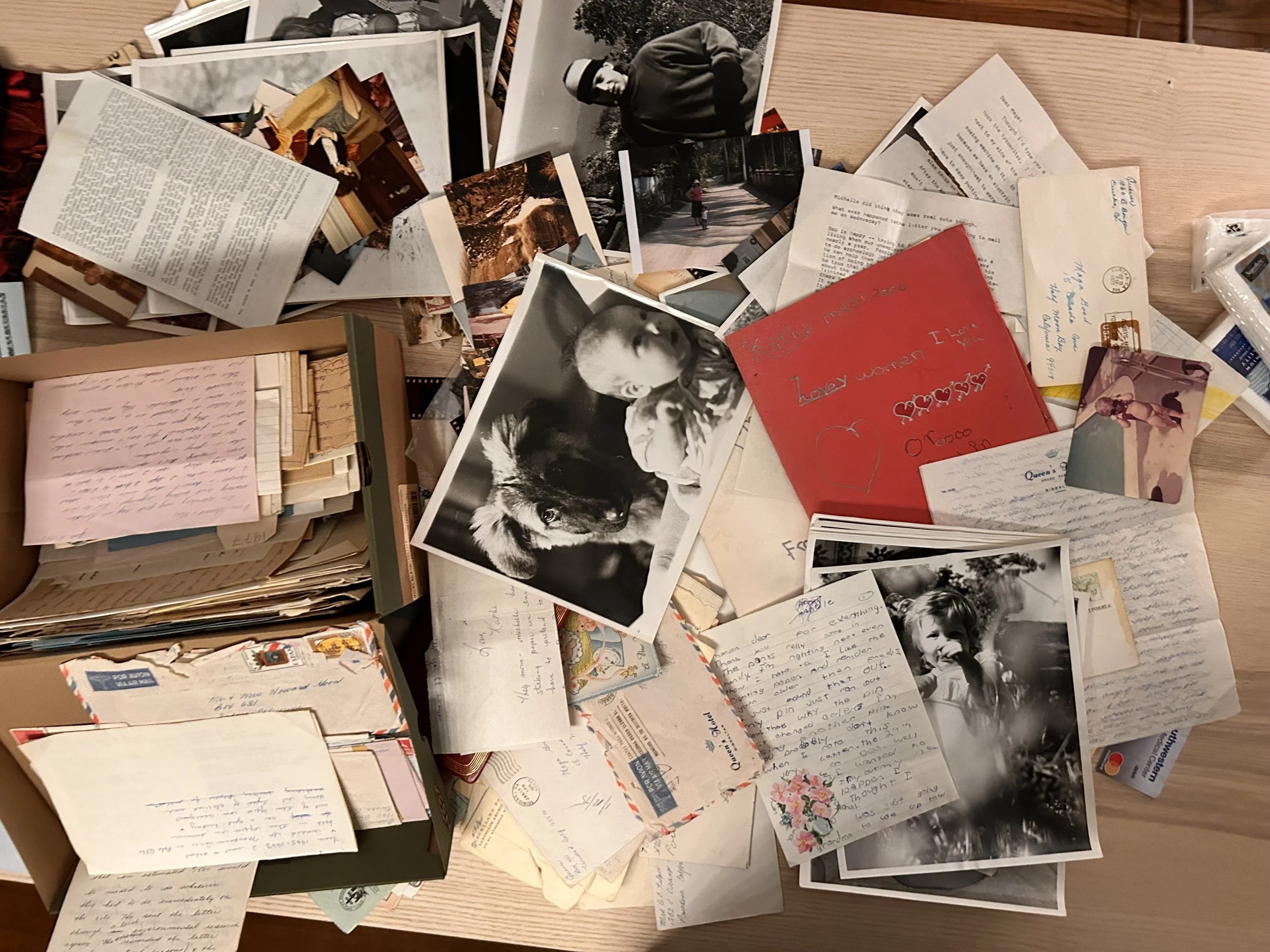
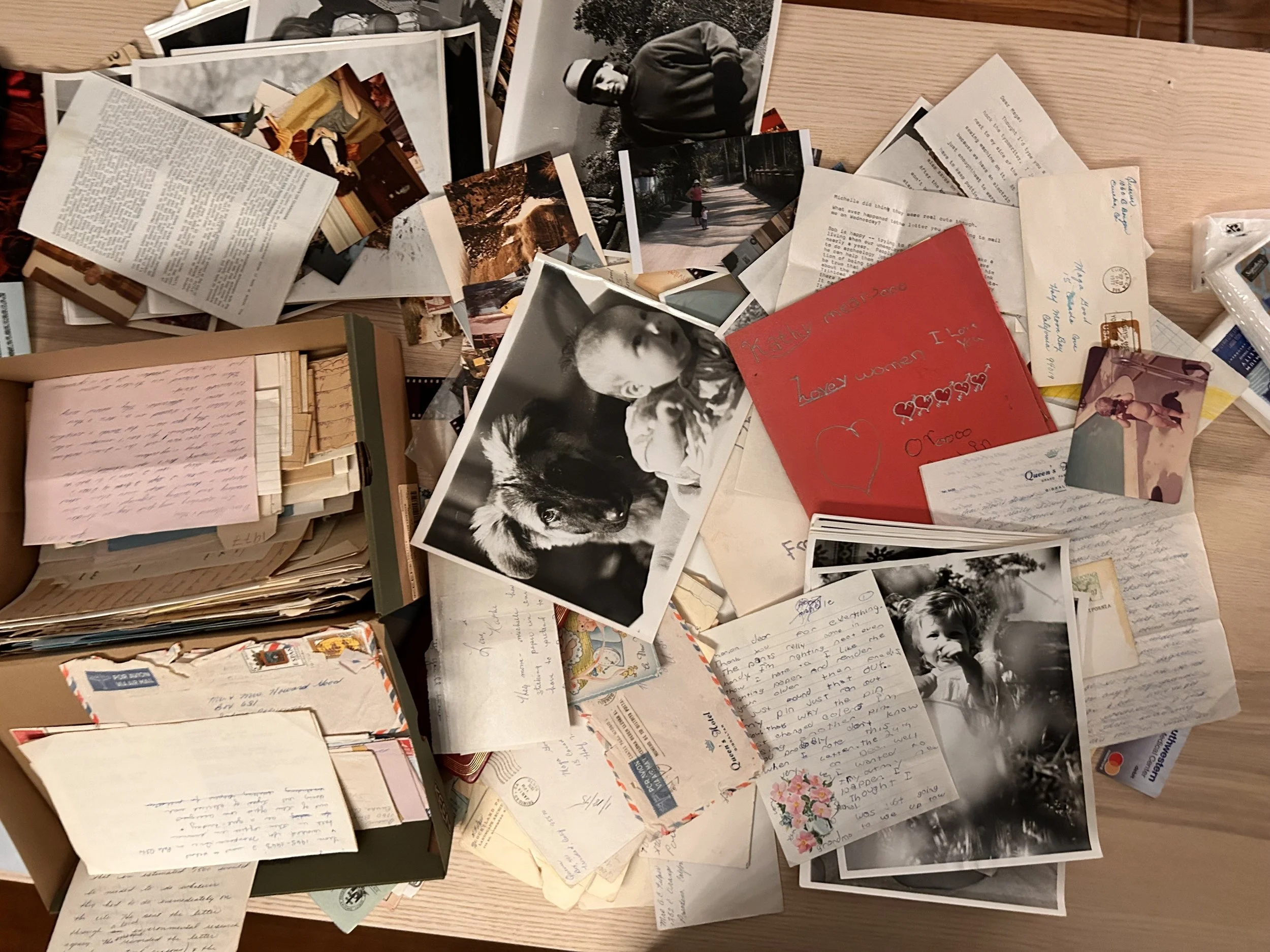
Now. I’m an instant photograph. I’m an undeveloped Polaroid, seeking light to provoke my emulsion. Layers of amnesia. Retrograde. Antegrade. Layers of pieces of myself, diffusing into the painstakingly, slowly developing images. Pieces of whoever I am. Whoever I was. I’m not (not really) an amnesiac. I, Michelle Kathleen O’Kane, etc., etc., etc., am a Time Traveler. An object.
An object in time travels if and only if the difference between its departure and arrival times as measured in the surrounding world does not equal the duration of the journey undergone by the object. This place. The soft grey shawl is on my bed, and my knitting project is on my bed. The book on my nightstand is The Echo of Old Books. My notebook, whose pinkish pages wait patiently for the next bit of words that I’m sure to emote before incessantly conversing about me. About myself. Every thing that used to be my life.
My existence used to encompass the world of seeing new places on other continents. And writing romance novels while I still believed in romance and excitement and love.
Memories of sharing meals with people I loved. Mimosas at brunch. Cosmopolitans before dinner. Vintage chardonnay with dinner. I wake up while driving in various cars, and I’m always the driver. Frequently, I’m 280, approaching the 92 exchange. Aware. While I’m driving, I surround myself with the color-changing hills. I’m humming along with Elvis Costello. Every day I write the book.
Now — I’m pointed west, driving to Half Moon Bay. I’m in various makes of cars, all of which I owned. Today I’m driving a clutch — my blue Ford Ranger. This is the car I purchased with money I inherited after my mother died. I am now 18, and she died just a few months ago.
I drive past memories. The Half Moon Bay Nursery, on the north side of 92. Then I’m just starting to drive through the outskirts of Half Moon Bay. My town. My ocean, sea salt, and blue sky and sea, white wavy clouds tying the sun and sea together. I’ve finally realized and understood how crazy I am.
I haven’t watched a movie with another person in over 5 years. I haven’t laughed with someone in as many years. A few times, something I’m watching or hearing has caused the sound — the sharp chirp of a laugh. My laugh. The noise scares me. Hearing my own laugh is such an unfamiliar sound that it shocks me.
Time is on my side, and so am I. Gravity is giving me a gentle push to roll across the green grass. Damp grass leaves keep me alert. Behind me is the 5’4” wide trail I’ve left while rolling down this hill.
I’m jealous of many of the things I see on TV. And Instagram. Landscapes and cities and people at tables with white espresso cups.“You don’t look back along time but down through it, like water. Sometimes this comes to the surface, sometimes that, sometimes nothing.
Nothing goes away.” —Margaret Atwood

My Amnesia Battle: Anterograde Vs. Retrograde
My memories are shrapnel and bloody bits of flesh and jagged pieces of time.

My memories are shrapnel and bloody bits of flesh and jagged pieces of time.
Dirty smoky air, which I breath. Pieces of parts of things. Of people. Blood, streaming onto and into the sharp, steaming shrapnel. I see familiar images --memories deteriorating on the ground.
I am my own world. My spinning world of love and grief and memories. My world of my words. My world of my worlds. My ether, with floating, evolving, melting snowflakes.
At first, it’s a party. People come over. They bring food and flowers and booze. They clean. They cook. How are you? They ask, because they truthfully want to know. They bring books and ask you to go on walks. They plan the memorial. They stay by your side on that day of celebration. Like a birthday party, a memorial celebrates a life.
The memorial is the last phase of people gifting you their time. They must get back to their lives. They must get back to the people in their lives. Friends visit only on weekends. The phone rings less. The walks get shorter and scarcer. The carefully wrapped casseroles stop appearing in the kitchen. The flowers start to wilt, dripping their leaves on the tabletop. Like snowflakes and people — flowers melt.
How are you doing? The soft voices that asked the caring questions start to evolve in tone, speed, intonation. And topics. Conversations evolve into the talk of life. The lives of the living.
But I can't, I don't, return to my life because my life isn’t there anymore. And never will be again. Guernica.
My friends go out for dinners and take day trips to lakes. They eat at home or at the home of friends. They return to their worlds. Silence now permeates what used to be our home. My house is now empty of noise because it is now missing my favorite sound. Now nothing seems right.
Now. For whom do I cook? Who do I cook with? How do I comfort others? How do I adjust to a new life without that person’s existence? In the beginning, there is disbelief and shock. The phone becomes a cold thing. It no longer brings me silly messages from the now dead person. I start feeling more emotions. These emotions slowly start to fade. This happens as I adjust to what’s missing from my life every fucking day.
Then — then things start seeming kinda normal. I notice that the world is continuing. I cry less. I lol. I listen to a podcast. I eat breakfast.
Life goes on and so do I.
I no longer have shock or disbelief to numb me. I no longer have the fresh, bloody cuts to bandage. All I have are what’s bleeding under my severed arteries and punctured organs and smokey images.
Memories. Trees and babies and so much beautiful food. Love. Hate. Sadness.
So many faded, deteriorating, decomposing images Last century’s photographs, drifting and joining and melting.
I know that I’ll remember all of the things again — and again. But my memories won’t be exactly the same. Our memories change, for the better, just a little bit every time we remember them. Our memories are protein.
I knit and I knit. A scarf for Darlene. Darlene will smile. I’ll feel her smile in the yarn coming alive in my hands. I’m
I’ve started knitting
My friends go out for dinners and take day trips to lakes and my friends eat at their homes. The homes of other people. They return to their worlds. My world is too fucking quiet. And that makes my brain a smokey battlefield of memories.
Brain Damage, Amnesia and Me
My name is Michelle, she/her. I’m a writer. And amnesiac. In 2019, my gallbladder ruptured. The rupture caused a severe infection that cut off oxygen to my brain, leading to permanent brain damage.
Retrograde amnesia is a form of memory loss characterized by an inability to recall events that occurred before the onset of amnesia.
Anterograde amnesia is a type of memory loss that prevents the formation of new memories.
After surgery, living alone was impossible, but soon after, wonderful friends welcomed me into their homes.
During the first weeks after surgery, every morning brought the same paralyzing confusion. I had no idea where I was, even in houses I'd visited dozens of times. People quietly escorted me to the bathroom so I wouldn't disappear elsewhere in their home.
After losing my driver's license, which happened soon after the onset of my amnesia, I had to rely on others for meals. Formidable tasks, such as walking to a store, became futile, overwhelming battles.
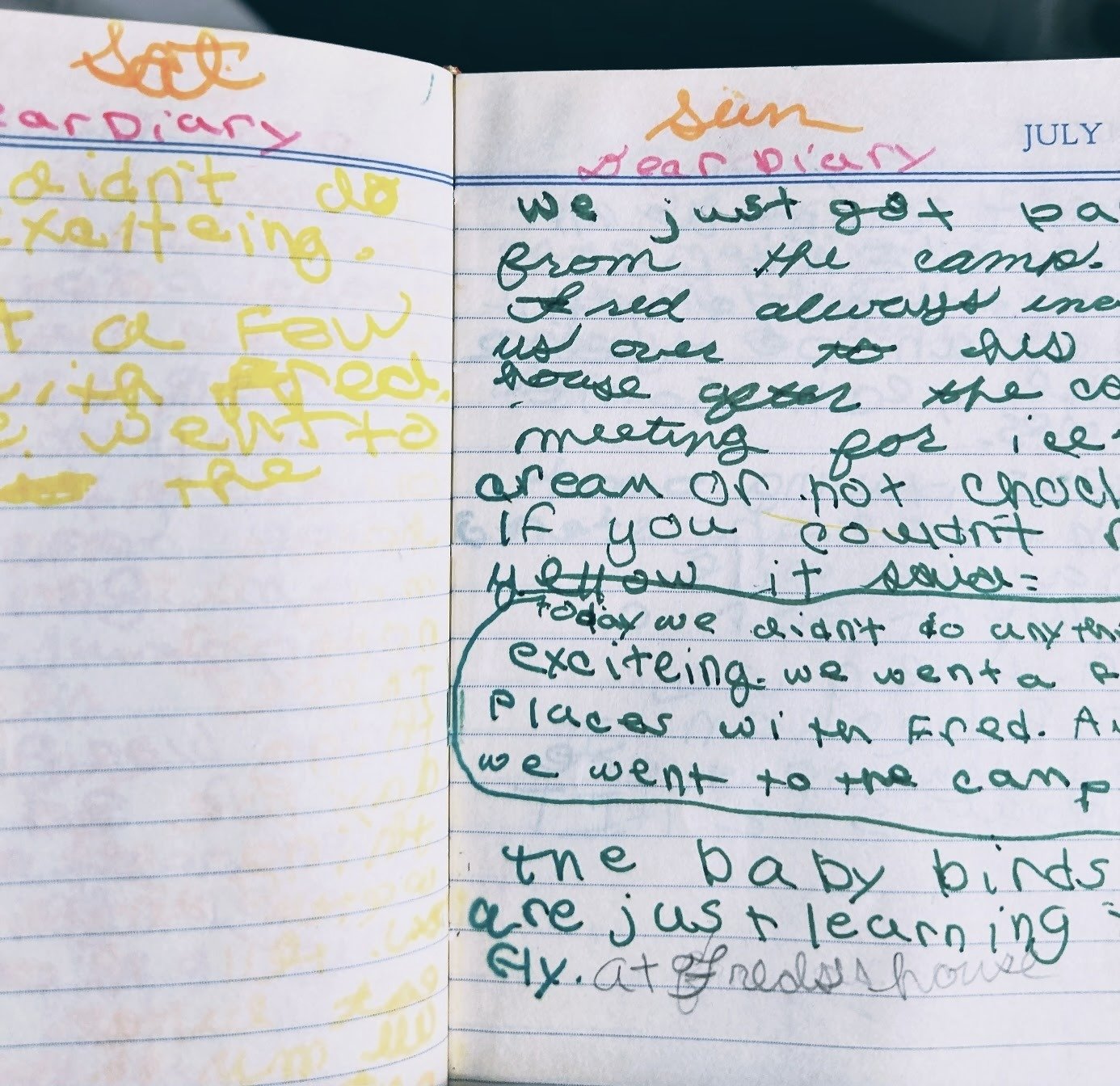
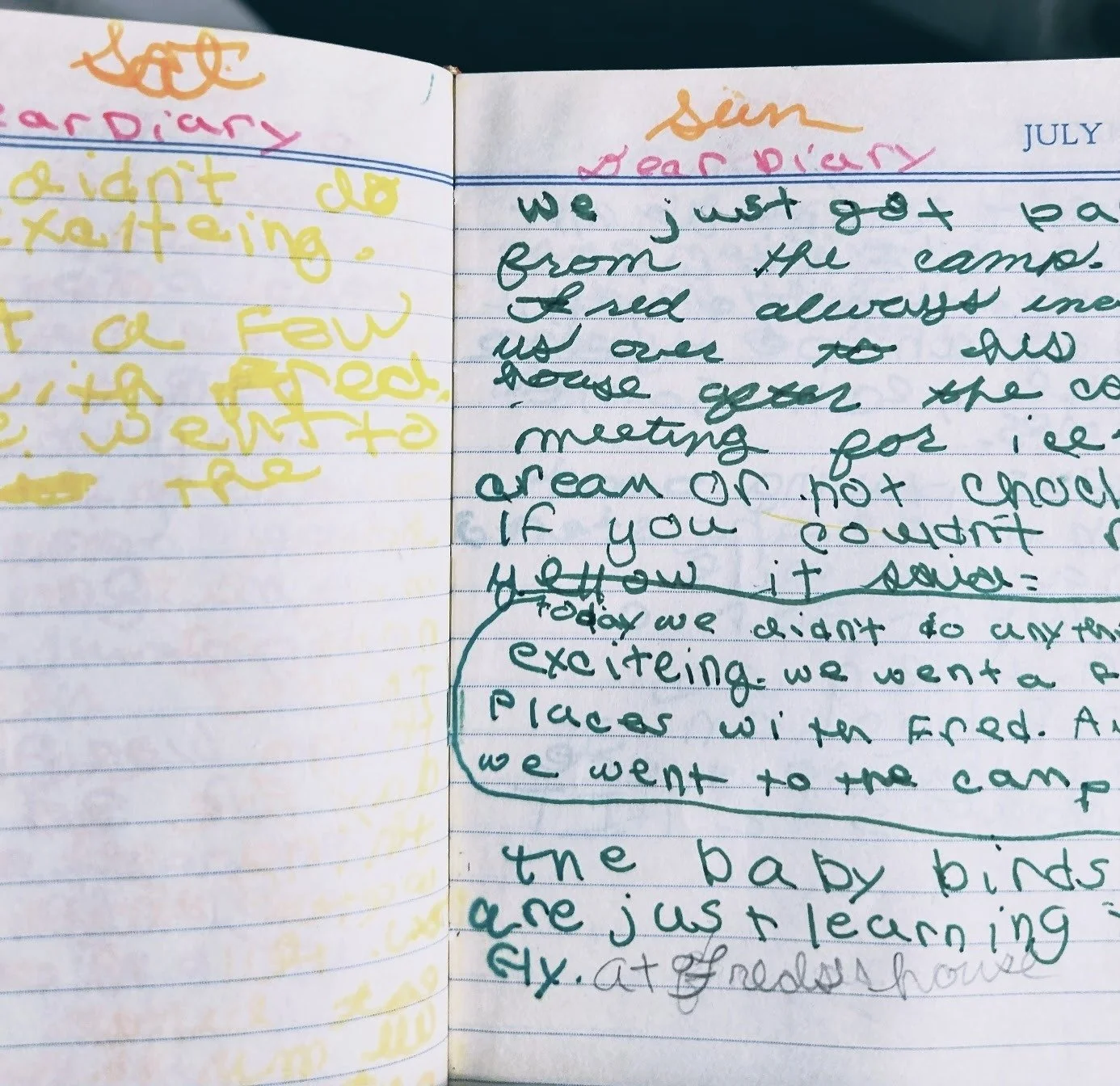
As a writer, I found the diaries I'd kept since childhood. Reading entries—like discovering my three published romance novels—helped me piece together my life, even as it often felt like reading stories written by a stranger.
In the early months of recovery, I couldn't live on my own anymore. My driver's lisence was taken away.
Every morning, I woke up sad, scared, and confused, not knowing where I was. But as days passed, I started waking up to find sweet, handwritten notes that announced where I was. It wasn't uncommon for me to wake up many times a day.

The rare times I managed to sleep during those first months after surgery created a world in which the differences in my existence made me feel as if I were a book that had been instantly deleted. And now I was rewriting my stories in the absolute wrong order.
(Which is how my memoir about my existence as an amnesiac is being written.)
My friends patiently helped me navigate their homes, guiding me to the bathroom, kitchen, and backyard to prevent me from becoming lost.
After losing my driver's license soon after surgery, I relied on others for essentials like food. My weight dropped to 92 pounds, and I was deeply grateful for their help during this difficult time.
Through those diaries, I tried to assemble the pieces of my life, learning who I was page by page.
As I pieced together my history, I found stories about risky choices, profound loneliness, and honest thoughts about my mom, who died after brain surgery when I was 17.
Now, years after the surgery and the onset of amnesia, I'm still learning about myself every day.
My writings revealed moments of pain and loneliness, but also my vulnerability and love for my mom, who died after surgery to remove her brain tumor when I was 17. Her influence still guides me.
Some memories are slowly returning, but severe retrograde and antegrade amnesia still shape my daily life.
Here, I share my writing about what it's like to live with amnesia.
I'm glad you're here. Welcome to my world. Some days I remember, some days I forget, but I always keep writing.
And knitting.
And attempting to play my ukulele, which is a frequently unwon battle.

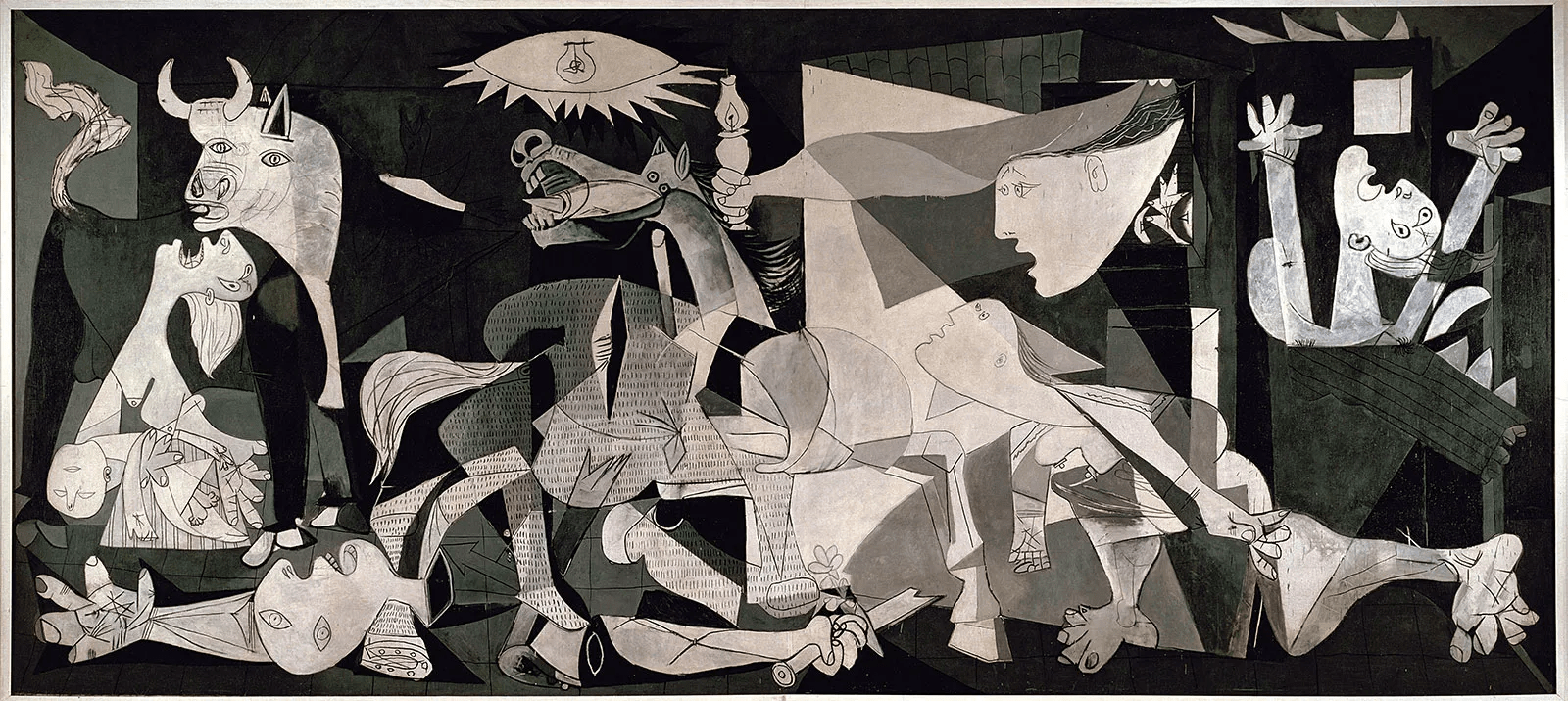
Guernica
The air is thick, smoky, pressing into my lungs. Everywhere I look, there are fragments—shards of things, of people. Blood on metal, heat rising. Even the faces around me seem unfinished, as if everyone is made from scraps. The world outside leaks into the world inside me. Both are scattered, both incomplete.
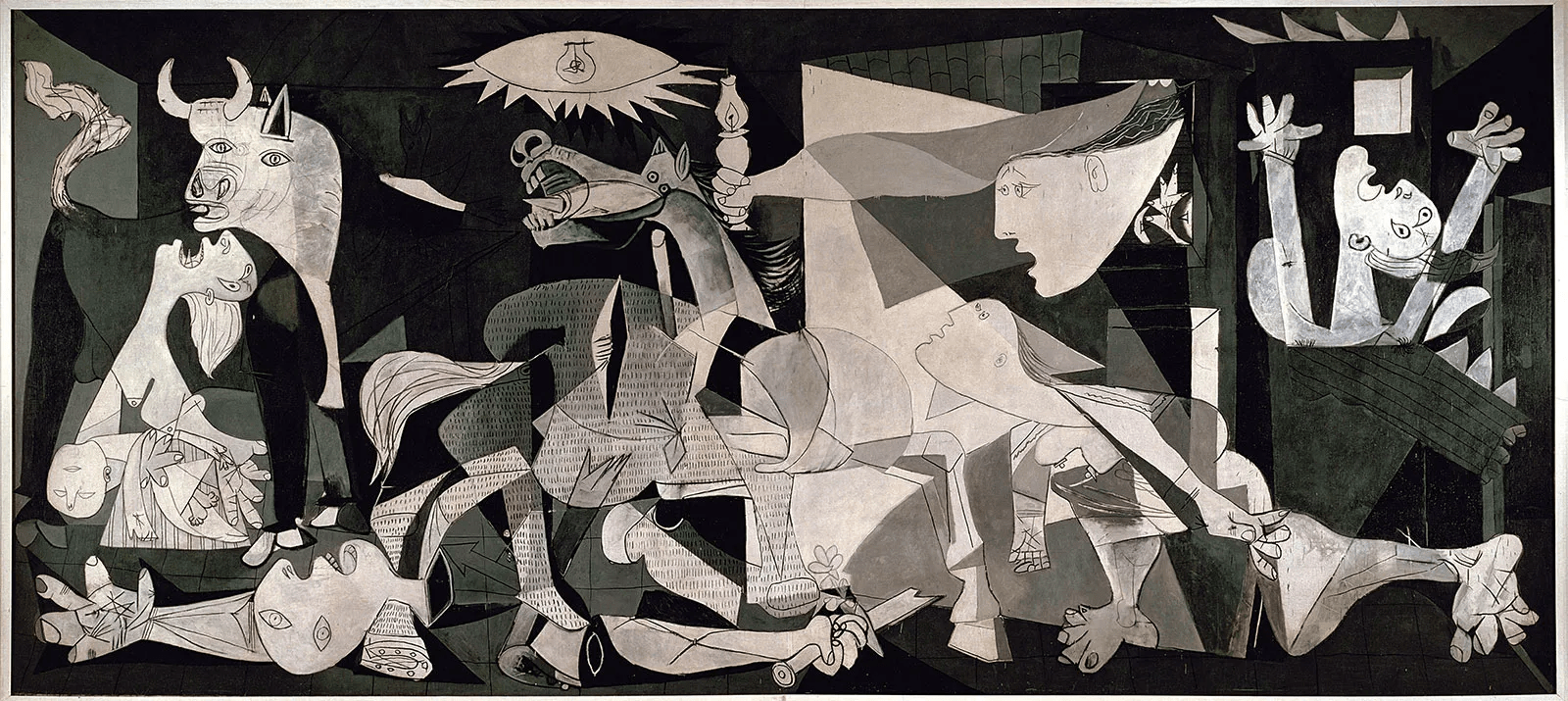
My memories are scattered. Sometimes they show up as sharp fragments, bloody and jagged, lost pieces of time. Other times, the past grows hazy and slips away when I try to hold on. My mind feels like an abstract painting, and I have no idea who created it.
I walk alone through Bilbao, the streets uneven beneath me. My Tivas dig into my feet, straps leaving red marks I’ll find later, reminders that I was here.
Pebbles shift under my steps, tiny echoes of all the pieces I carry inside. Each movement pulls at something old, something I thought I’d left behind.
The air is thick, smoky, pressing into my lungs. Everywhere I look, there are fragments—shards of things, of people. Blood on metal, heat rising. Even the faces around me seem unfinished, as if everyone is made from scraps. The world outside leaks into the world inside me. Both are scattered, both incomplete.
I am my own small world. Love, grief, memory—these are the things I hold. Words and air, snowflakes that drift down and melt before I can touch them.
At first, it’s a party. People bring food, flowers, and booze. They clean, cook, and ask, wanting to know. Books arrive; walks are suggested. They plan the memorial, stay by your side. Like a birthday party, a memorial celebrates a life.
After the memorial, the world shifts. Friends slip away, returning to their own routines, showing up only on weekends. The phone sits silent. Walks get shorter, then vanish. No more casseroles, no foil-wrapped leftovers waiting in the fridge. Flowers droop, water rings left behind on the counter.
How are you doing? People still ask, voices softer, but they don’t wait for the answer. Their words drift back to errands, dinners, the business of living. I stand just outside, watching, unchanged, as if I’m behind glass.
But my life isn’t there to return to. It’s gone. It won’t come back.
Who do I cook for now? No one stands beside me at the stove. The kitchen is too quiet. At first, there was only shock. Now the phone is cold, silent, no more silly messages lighting up the screen. I feel everything, then nothing, learning the shape of the empty space. Routine molds me. Outside, life keeps moving, as if nothing happened.
Then, somehow, things start to look normal again. The world keeps moving, and I watch from the window. Something unsettled lingers in the air. I cry less. I laugh sometimes, but the hollow stays. I listen to a podcast, eat breakfast, try to fill the emptiness with small rituals. This new normal never matches what’s inside me.
Life keeps going, and so do I. I carry loss and whatever strength I have, step by step.
Shock and disbelief have faded. I’m not numb anymore. The wounds are hidden under skin, but the ache is still there. My mind clings to blurry, aching pictures.
Memories. Trees. Babies. So much beautiful food. Love. Hate. Sadness.
So many memories are fading, breaking down like old photographs left in a drawer. The pictures I used to see clearly now blur together, shifting from sharp color to washed-out black and white.
I know I’ll remember it all again. Each time I reach for a memory, it changes shape. Nothing stays the same. Every visit shifts the scene—old pictures replaced, blurred by new feelings.
My friends go out to dinner. They drive to the lake for the day. They eat at home or at someone else’s table. They slip back into their own worlds. Mine is just too fucking quiet.
I stand still in front of Guernica. My mind keeps circling back to Bilbao, again and again. Maybe I’m trying to find the memories I lost.
Now, when I look at photos of the Guggenheim Bilbao—whether in my mind or from the times I was really there—I see the building’s soft, flowing lines. I can almost feel the curve, cool and smooth under my hand.
The tragedies of war never fully disappear.
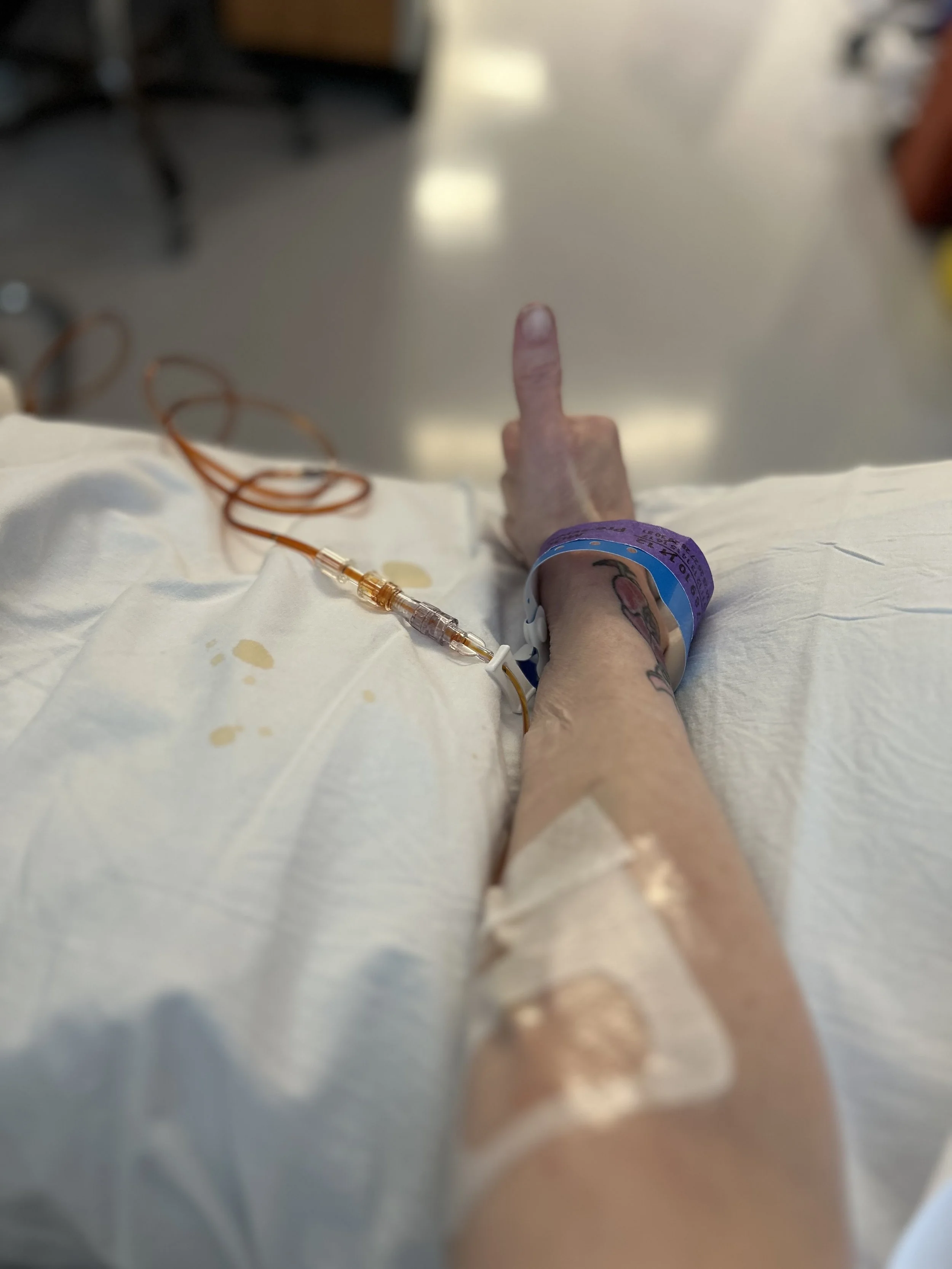
SAFETY IS AN OBSERVATION
I want a sandwich. I want ice-cream. I want to eat with love. With people I love.
I want to see flowers. I want to feel warm water. I want to feel waves melting around around my body. I feel stupid. I feel smart. Do I feel smart because I'm so fucking stupid? Feelings are supposed to be shown, not told, when writing. Show don't tell. I want to feel happy. I want to eat. I want to know. I want my hair to not fall out. I need a break. I need a brain. I want a break that lasts me the rest of my life and beyond.
I don't want to be standing on the gymnastics floor, eight years old, with my gymnastics teacher, Wayne, behind me. Gently reaching around to push his hands down the front of my shorts. I told my mom.
She stared at me.
I want my hair back. I want my life back. I want a sandwich. I want ice-cream. I want to eat with love. With people I love. And who love me. I want to sleep. Forever. I want to live happily. Indefinitely. I want to hold my newborn son, every one of these days. I want to be in love and mean it. I want to hide in a lake. I want to hide with fish. I want to write about people who exist, and who are good. Instead I'm swimming fiercely in rocky, murky water. My legs are drumsticks. My legs beat beat beat. The wood, shattering on the wet, sharp rocks. I taste blood. I remember the metallic, plastic, blasting—the sound of my typewriter smashing cement after I threw it over my second-floor balcony. Little brown buttons with letters in a dark courier font splattered the ground. H and I, two stated.
Whenever I find myself in the hospital room, standing next to the bed on which is resting my dead mother, in indecipherable spans of time, I am looking out the window. It is Summer Solstice, which means I am nearly exactly 17.5 years old. I am staring at the white blinds, which are slanted open, and I look through countless strips of plastic, I am looking at the sky. The sky is blue. Above the top of the concrete roof of the fifth floor of the other wing of The Hospital, the sky is blue. It's that clear, clear, clear, clean, windex blue. The kind of blue that only happens for a little bit of time, on days with a slight breeze, and little pollution. Danny and I--Danny Lee Clark Junior (he's dead now, too) and I--had left the trailer in San Jose, after the call came, around 7:30 a.m. Now, it was around 9:30. It wasn't yet 10:00. The light would be less clear at 10:00. It would start to look hot. And it was, after all, June. June 14th. 1990. I look at my mother. I look at her. She looks peaceful. I'd never seen her look so peaceful. Ever. The bandage wrapped around the top of her head was neat, and clean, and white. It only covered the top of her eyebrows. I would not--did not--think about the bloody wound hiding beneath the clean, white dressing. It was all dead. She was dead. Standing on my balcony, in Reno, I watched the explosion.
When the typewriter hit the concrete, the black ribbon spool still pressed against paper. After the ancient typing machine crashed onto the ground, I remember brown leaves drifting around my brown typewriter, like ballerinas, floating in the blasted air. Today, now, I want to see the brown leaves drifting across the scuffled concr ete of my patio. I want to look between the brown patio steps and see the ground. I want to hear the shuffling sound of shoes as people walk on the other side of the fence, unaware of what they're missing over here.
What I want to be is home. I want to be cooking paella on my stove, in our house, that I toured with Jay with a real estate agent. I want to be standing in our kitchen, in front of the counter, chopping vegetables on the countertop that I designed. I want to boil water on the stove that I, after much research, had installed. Our 5-year-old son watches something silly on the tv with J, who is sitting on the long sofa, a shot-glass of to-be-sipped-slowly tequila in his hand. They watch the green Bang & Olufsen television. I want to be there, at home, where I was--where I thought I was--safe. Safety is an observation.
Nothing Goes Away
An object in time travels if and only if the difference between its departure and arrival times, as measured in the surrounding world, does not equal the duration of the journey it undergoes. In this place, the soft grey shawl and my knitting project are on my Anthropologie quilted bed.
Now, I’m an instant photograph—an undeveloped Polaroid, seeking light to reveal myself. I’m composed of layers of amnesia—retrograde, antegrade. Pieces of who I am or once was diffuse into the painstaking, slow development of images. I’m not really an amnesiac. I, Michelle Kathleen O’Kane, am a Time Traveler. An object.
An object in time travels if and only if the difference between its departure and arrival times, as measured in the surrounding world, does not equal the duration of the journey it undergoes. In this place, the soft grey shawl and my knitting project are on my Anthropologie quilted bed. The book on my nightstand is The Echo of Old Books. My notebook, with its pinkish pages, waits patiently for more words—words I will emote before talking incessantly about myself and everything that used to be my life.
There was a time when everything felt possible. I wrote stories I believed in, and imagined new places and the hope of falling in love.
Memories of sharing meals with people I loved. Mimosas at brunch. Cosmopolitans before dinner. Vintage chardonnay with dinner. I wake up while driving in various cars, and I’m always the driver. Frequently, I’m on the unpopulated northern lanes of Highway 280, approaching the 92 exchange. Aware. While I’m driving, I surround myself with the color-changing hills. I’m humming along with Elvis Costello. Every day I write the book.
Now I drive west, heading toward Half Moon Bay. Always in my own car. Today it’s my blue Ford Ranger, the one I bought after my mother died. I was seventeen. She had only been gone a few months.
I pass the Half Moon Bay Nursery on the north side of 92. I drive through the edges of my town. My ocean, the salt in the air, blue sky, and the sea. White clouds stretch across the sun and water. I realize now how strange I have become.
I haven’t watched a movie with anyone in more than five years. I haven’t laughed with someone in just as long. Sometimes, something on TV or the radio pulls a laugh out of me—a quick, sharp sound. It surprises me. I hardly recognize it as my own.
Time is on my side. Gravity nudges me across cool, damp grass. Behind me, a 5’4” wide trail marks where I’ve rolled down the hill.
I’m jealous of many of the things I see on TV. And Instagram. Landscapes and cities and people at tables with white espresso cups.
“You don’t look back along time but down through it, like water. Sometimes this comes to the surface, sometimes that, sometimes nothing. Nothing goes away.”—Margaret Atwood